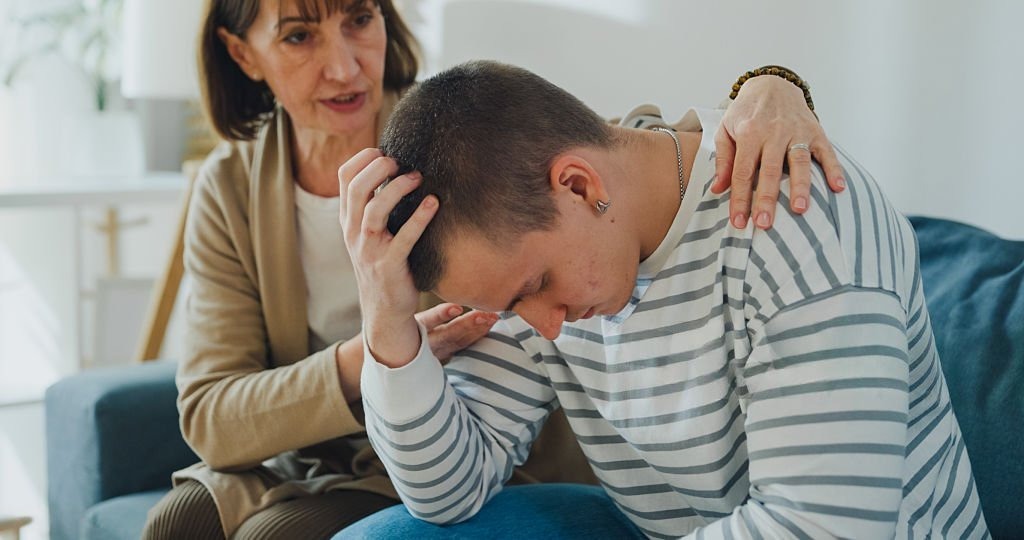
Shame is one of our most powerful emotions. It can shape our behavior and warp our attitudes for a lifetime unless it is allowed to heal. Shame is present for many people around addiction. Sometimes shame can help save a person in active addiction, because it makes things painful enough that they feel motivated to enter recovery. Once that person is in recovery, though, shame not only loses its helpfulness, it can become one of the most potent reasons for relapse.¹
The harmful effects of shame are not just a problem for the person with the addiction. Addiction and shame often affect the whole household, not just the person who is drinking or using. Everyone in the family is vulnerable to it, from parents who wonder where they went wrong, to partners and children who blame themselves for the addiction and its effects.
Both people with the disease and their family members can use addiction as proof that they should feel ashamed. They often think of themselves as flawed, broken, unworthy, or not enough. This can lead to denial, dishonesty with self and others, trying to hide the addiction, downplaying how bad things are getting, or trying to fix what is beyond their power to fix.
Recovery moves people in the opposite direction. It is not based in shame or blame. Instead, it moves people toward honesty, self-compassion, and acceptance of self and things beyond their control.
The Truth About Shame and Addiction
Shame is a naturally-occurring emotion. It may act as an early-warning system to say our behaviors are getting so bad that we may no longer be acceptable to those around us. When we feel that fear, we can give ourselves shame messages that are meant to get us back in line.
Unfortunately, this can backfire when it comes to addiction. Rather than having shame motivate us to color inside the lines, some of us turn to addictive actions to escape the shame. This may help in the short run, but it ends up building more shame as things spiral downwards. This is part of the addiction shame cycle, where emotional pain and addiction keep feeding each other.
Similarly, family members may feel very threatened by a loved one’s addiction. When family members can’t make it stop, no matter how loving, angry, or patient they are, they can start giving themselves shame messages about it. There can also be shame messages based in fear of what others will think if they find out about the addiction in the family.²
If the family has a history of addiction, these shame messages may get passed down from generation to generation. This could include ideas such as:
- We need to hide family struggles.
- It’s better not to talk about painful feelings.
- If we can’t control the addiction, we aren’t doing a good enough job.
- Children are responsible for their parents’ emotions.
- We need to make things look good on the outside.
- If I just tried harder, everything would be okay.
- I’m not allowed to be okay if my loved ones are struggling.
- If my loved ones are upset, I must have done something wrong.
These messages may have been passed down in words or as shaming behavior from caregivers who themselves were shamed as children. When families struggle with impossible problems, kids can get caught in the crossfire.
Children can find themselves feeling responsible for parents’ problems, just as parents may feel responsible for their children’s struggles. Partners often feel trapped with a set of terrible choices, especially if there are children involved in the relationship. This leads to family members feeling worse and worse, trying harder or shutting their emotions down as much as they can. The family can become organized around the shame of a loved one’s struggles. Over time, this can shape family roles and make addiction and family healing harder for everyone.
This can lead to emotional distance, exiling the person with the addiction, pretending like everything is okay, and pouring so many resources into trying to save the person with the addiction that others in the family are not getting what they need.
Needless to say, none of this helps.
How Shame Impacts Recovery and Recovery Impacts Shame
What may be surprising in early recovery is that even when the negative behaviors have stopped, the shame keeps on going until healing work is done.³ Shame messages are persistent, because our brains mistake them for survival skills.
Thus, both the person with the addiction and their family may still struggle even after years of sobriety. They may still feel like they have to make everything look good in recovery. They may think being hard on themselves or each other will motivate recovery. They may think they have to walk on eggshells. They may tell themselves that they can never make up for the mistakes of their past.
All of this can lead to questioning if sobriety is even worth all the trouble.
Shame in addiction recovery needs healing, not silence. This is why recovery fellowships like Alcoholics Anonymous, SMART Recovery, and others offer practical tools and processes to open up and reduce shame, such as the Twelve Steps and SMART tools. Family members have the same resources available through family recovery fellowships like Al-Anon, SMART Recovery Family & Friends, and others.
Many people also benefit from group and individual therapy. The tools and techniques offered in this supportive environment lead to reducing shame until it is no longer a pressing problem.
It is hard to let go of shame when active addiction keeps adding new problems, but no one needs to suffer with it once they are in active recovery. This goes for family members just as much as the person who has the disease.
Accountability vs. Shame
Sometimes people think letting go of shame is best accomplished by “putting the past behind us” and never bringing it up again. What this does instead is leave people struggling with unresolved emotions, often not knowing what it is that is affecting them.
What works better is to look squarely at whatever mistakes have been made and whatever damage has been done, and work to resolve it without shame. This is easier said than done, but countless people have made progress no matter how bad the past behaviors were.
It can be helpful to recognize the difference between shame messages and accountability.
Shame messages say: “You are your mistakes, and you can never make up for or escape them.”
Accountability says: “Your mistakes are real, and you can learn from them. Where damage has been done, it can and should be resolved to the best of your ability.”
Shame messages lead to misery and increase the chances of relapse.
Accountability leads to recovery and self-esteem, and it supports emotional healing in recovery without adding more blame.
This applies just as much to family members as it does to the person with the addiction. Family members benefit from facing the truth of the family situation and their place in it. Where they have made mistakes, they too can find healing by facing them and working toward behavior that better fits their goals and values. They, too, can feel peace that is not tied to their loved ones “behaving right.”
For most people, this will be easiest when they accept help.
How Windmill Helps Families Heal from Addiction and Shame
At Windmill, we know that getting sober from addiction takes more than just quitting alcohol and other drugs. It also involves dealing with underlying shame and other difficult feelings. That’s why our clients learn to treat themselves with kindness and compassion rather than shame and judgment.
We also understand that families need support, too. Family recovery from addiction often begins when loved ones learn that healing does not depend on controlling someone else’s choices. Our family program helps our clients’ loved ones move into a more positive mindset toward themselves and those they love. This can help transform family patterns for this and future generations.
We have regular classes in CBT and positive psychology. We use recovery fellowships like the Twelve Steps and SMART Recovery to help transform self-image. Our therapists and recovery coaches help clients explore what they tell themselves and teach them practical techniques to change their way of thinking.
Every day, we see that when people believe they can recover and feel good about themselves, they are much more likely to find hope and healing. We specialize in compassionate, evidence-based treatment for both addiction and trauma, helping individuals and families rebuild stability and hope. If you or someone you love needs support, we are here. Call 830-223-2055 or contact us online to take the first step toward healing.
References
- Blum, K., Gold, M. S., Jafari, N., Lewandrowski, K. U., Sharafshah, A., Mohankumar, K., … & Zeine, F. (2026). Beyond Stigma–Integrating Neurobiology, Genetics, and Awareness Integration Theory in Addiction Recovery. Psychology Research and Behavior Management, 19(0), 12475771.
- Liahaugen Flensburg, O., Richert, T., & Väfors Fritz, M. (2023). Parents of adult children with drug addiction dealing with shame and courtesy stigma. Drugs: Education, Prevention and Policy, 30(6), 563-572.
- Carroll, T. D., Cornish, M. A., Marie, L., Kim, E., Fadoir, N. A., Taylor, S. E., … & Currier, J. M. (2024). Understanding self-forgiveness in emotion-focused therapy: An interpersonal process recall study with men in recovery from addiction. Journal of Psychotherapy Integration, 34(4), 401.
Frequently Asked Questions
Why do family members feel so much shame about a loved one’s addiction?
Family members often feel helpless in the face of addiction, yet can tell themselves they should have been able to cure or control it, or even think they caused it. These ideas can all result in shame.
Can shame increase the risk of relapse?
Yes. Shame has been shown to make people in recovery more prone to relapse. That’s why a recovery approach that includes shame reduction is so important.
Does reducing shame mean letting someone avoid responsibility?
Not at all. Accountability has an essential place in addiction recovery, both for the person with the disease and their family members. Accountability can be accomplished without assigning shame or blame, and this makes it even more effective.
Can families recover even if their loved one is not sober?
Absolutely. Family recovery can be accomplished through family recovery groups like Al-Anon or SMART Family & Friends, therapy, and focusing on their own recovery. This does not require the person with the addiction to get better for the family as a whole to start to heal.