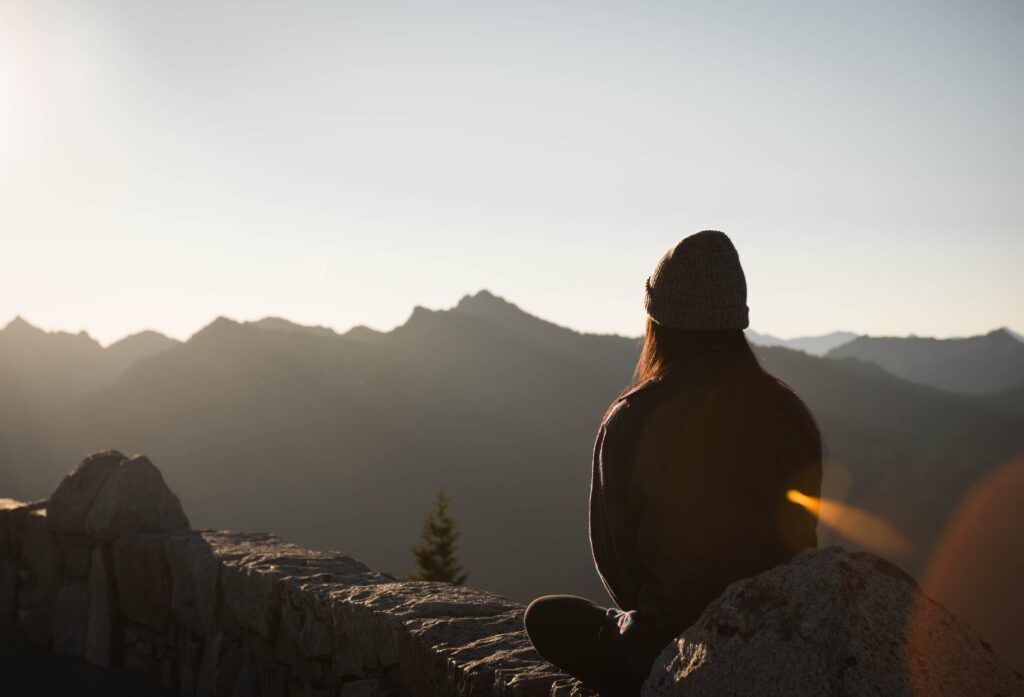
Meditation
August 14th, 2023
By P. Casey Arrillaga, LCSW, LCDC
Much
has been said and written about the benefits of meditation, yet it is still a
mysterious idea for many people. Thus, this post, based on an excerpt from my
book Spirituality for People Who Hate Spirituality, will get into what
meditation is, some of its benefits, and some ideas about how to go about it.
What
is Meditation and Why Should You Do It?
So,
what is meditation, exactly? Some common ideas include clearing, focusing, or
relaxing the mind, and/or thinking deeply about something. Throughout history,
meditation has often had spiritual connotations, but many modern people
practice meditation without considering this aspect.
There
is much research extolling the benefits of meditation. Doing it daily for a few
weeks has been shown to improve mood, emotional regulation, attention, and
memory even in people who have never meditated before. It leads to better brain
function and more grey matter in older adults who regularly meditate. Meditation
decreases anxiety, depression, and stress in both the short- and long-term.
Additionally, it leads to significant improvements in heart rate, breathing
rate, and blood pressure. Meditation can improve recovery from PTSD. It has
also been shown to have significant benefits for recovery from addiction and
other mental health issues.
It
is notable that in every study, these benefits came after weeks of daily
meditation, so keeping it up is a necessary part of the process. There’s a
reason they call it a “meditation practice.”
Some
Ideas on How to Meditate
Having
seen the benefits, how do you go about it? There is perhaps an even
greater variety of forms of meditation than there is of prayer, and that is
saying a lot. Meditation can be highly individualized or follow a set of
instructions. It is often done while seated but can be practiced while
standing, walking, or lying down instead. Some people incorporate meditation
into their yoga practice. It can be done silently or using a chanted mantra. It
may be focused on mindfulness, a calming scene, or visualizing something you
want in your life. It may be done with eyes closed or gazing at an object, a
beautiful scene in nature, or the center of a flame. It may be enhanced with
relaxing or ethereal music. It may be free-form or guided. It may be done in
solitude or with an in-person or online meditation group. These are but a few ideas.
There
are no real limitations, so I’ll just give one of my favorite meditations here
and then point you towards some helpful resources for further exploration.
This
meditation is a mindfulness meditation. Mindfulness is originally a Buddhist
idea that encapsulates both focused awareness and complete acceptance of what
you find with that awareness. This acceptance does not mean that you have to
agree with everything in your awareness or that you cannot take action. It
refers instead to letting go of fear, anger, worry, etc., about what you
observe. You can then make decisions based on your core values and strengths
rather than being driven by your negative emotions. In this sense, mindfulness
involves deepening wisdom. As we will see, it can also be a gateway to
deepening spirituality.
In
this meditation, you will sit still and try to experience everything your
senses can detect, letting any other thoughts come and go. To begin, focus on
your breath. Without needing to control it, pay attention to every aspect of
your breathing. Feel the air coming in; feel the air releasing. Notice how it
feels in your nose or mouth. Let yourself be aware of the sensation of it in
your throat. Feel it in your chest. Notice your body moving with the rhythm of
your breath. Let this be the center of your attention.
As
distractions and thoughts present themselves, let yourself notice them without
judgment and then let them go. There is no need to fight them or push them
away. Instead, think of them as clouds drifting across the sky, and then bring
your attention back to your breath. As this becomes easier, let your attention
spread to the rest of your body. Notice where you are relaxed and where there
is any unnecessary tension. With each breath, allow more and more of that
tension to melt away, so that you are sinking deeper and deeper into a state of
relaxation.
Notice
any sensory information and do your best to accept it exactly as it is without
judgment. Feel where you are sitting. Notice your clothing and how it feels.
Feel the tips of your fingers. Feel your toes. Notice how you feel in your
face, especially around your eyes and jaw. If you notice any tension, let it
go. Feel your throat. If it feels closed or tense, let it open and relax. Check
your heart. Check your belly. As you experience each of these areas in your
body, let it relax and soften. Hear the sounds around you without attaching
yourself to any of them. Smell any smells in the air. Notice anything you can
taste.
See
how long you can sustain this. When your notice your attention wandering,
gently bring it back to the center of your breath and your accepting awareness.
Once you have recentered, see how long you can sustain it from there.
As
you try this, be gentle and patient with yourself. There is no perfection to be
had here. Instead, complete awareness and acceptance are ideals for you to
pursue. The closer you get, the better the results, but no one lives in that
headspace all the time.
When
first starting out, try sustaining attention to your breath for 10 seconds,
then 30 seconds, then one minute at a time. As it gets easier, see if you can
go a little longer, then a little longer. Over time, it will get easier, and
you may notice that you can drop into a state of mindfulness in more and more
circumstances.
This
meditation is but three of an almost endless number, and I encourage you to
explore until you find what works for you. As promised, here are a few ideas
that may help you in your explorations. There are many recordings of guided
meditations available online and more are being added every day. You can get
meditation apps for your phone, computer, or tablet. I regularly participate in
an online meditation-and-affirmation meeting that brings together people in any
kind of recovery from all over the world for 30 minutes every morning. I’m sure
it is not the only one of its kind.
There
are many books on meditation. My current favorite is “How God Changes Your
Brain” by Andrew Newberg and Mark Waldman. In it, the authors set out to
explore the science of spirituality and they come to the conclusion that
meditation is the surest path to the benefits of spirituality. The book
includes an entire chapter containing meditation after meditation, with
references to scientific studies that show how the various meditations are good
for achieving something useful for the practitioner.
If
you want to get further into it, there are meditation classes and individual
meditation teachers. Some spiritual paths, such as Buddhism or Transcendental
Meditation can involve hours of meditation each day, although they do not
require so much from most people, and offer guidance on how to participate in
their meditation practices.
The
Bottom Line
Whatever
meditation technique you find that works for you, try to practice it daily. One
of the biggest commonalities in the research on meditation is that the benefits
come from repeated, usually daily, practice. Some studies even validated that
there was a minimum, such as finding that things improved for the participants
after eight weeks in a way that had not happened at four weeks. In other words,
stick with it, and you will see good results.
About The Author
P. Casey Arrillaga is the Team Leader for Education at
Windmill Wellness Ranch, and he is the author of books including “Realistic
Hope: The Family Survival Guide for Facing Alcoholism and Other Addictions”.
His books, podcast, videos, etc. can be found at CaseyAuthor.com